
PAR Black Teacher Study Pilot
The Problem & Study Context

Extensive research has demonstrated that Black (and all) students have better outcomes when taught by Black teachers. Despite this, most schools nationally have more Black students than teachers. Moreover, Black teachers (and other teachers of color) have been leaving the classroom in greater numbers compared to their white counterparts.
Philadelphia and Detroit have not been spared from the broader trend of Black teacher turnover. A group of 10 Black teachers from Philadelphia and Detroit came together to make sense of the problem in their local context and consider solutions.
Study Design
With support from RFA’s research team, the group of Black teachers designed a PAR study, which began Summer 2023. The goal of the study was to gain greater insight on what needs to change to support Black educators by lifting up, in their own words, both the contributions they make and the challenges they face.

Credit: https://ideascale.com/blog/what-is-research-design/
What made this study special?
1.
Teacher-researcher led → Black educators from Philadelphia and Detroit designed the study
2.
Interviews and focus groups with Black teachers
3.
Focus groups with Black students
Our Findings
1.
Key Finding #1: Black educators in Philly/Detroit make important contributions. They are invaluable, in part, because they…

Intentionally form special connections with students and one another:
Picture Credit: Freepik

Are necessary voices speaking truth in an anti-Black education system:
Picture Credit: The Atlantic
2.

Challenge #1: The trauma of white supremacy

Challenge #2: Lack of resources and supports
“I see a lot of that now. The kids are not bringing homework back or falling asleep in class because [of] what's going on at home. Some of them are transient, staying at someone's home….Their lives are disruptive at times beyond their control. Parents losing jobs. They're not able to come to school…We need more support at school as teachers. We need to keep attendance officers because it is hard for us as teachers to teach, to grade, discipline, do all of those things. We still need attendance officers to check on what's going on at home, why the kids aren't coming.”
Picture Credit: Teen Vogue

Challenge #3: Lack of curricular autonomy in current political climate
Despite these challenges, many Black teachers choose to stay in the classroom because they love their students.
Taking Action!
Credit: Designed by Freepik
Taking action based on the research findings is a critical part of the PAR process. Two evidence-based actions have emerged from our work:

Action #1: Black Educator Voices Microsite
This microsite serves as a digital archive of Black teachers’ voices and experiences. The cohort discussed a need to shift the public narrative about Black teachers and elevate their voices and perspectives. Specifically, we wanted to highlight the transformational role Black teachers play in Black students’ lives. We also wanted to raise awareness about the challenges Black teachers face in schools in order to support structural changes, and improvements within the profession for all teachers and Black teachers, in particular.

Action #2: Black Teacher Mentorship Program
Our data from the pilot cohort demonstrated that lack of support for new teachers can result in their attrition from the profession. Both newer and veteran teachers in Philadelphia and Detroit within our sample (those we interviewed) spoke of the lack of support they received and the need for additional and improved early teacher mentorship within schools. We applied our learnings, alongside our own lived experiences as teachers and envisioned the following teacher mentorship program:
Teacher Mentorship Pilot Vision
Sometimes actions and visioning takes time! The below teacher mentorship idea is a work in progress.
To support, sustain, and retain Black teachers, this idea for a pilot teacher mentorship program derives from our research with Black teachers in Philadelphia and Detroit, as well as our own first-hand experiences as Black teachers. We believe a new model is needed to better support new Black teachers as they enter the profession and navigate the challenges transitioning from study to practice as well as the additional and unique burdens Black teachers face. Drawing on and utilizing the wisdom and education capital of Black veteran teachers, this mentorship program is designed with, by, and for Black teachers:

A full-time position for Black veteran teachers to mentor a caseload of 8-10 Black teachers within their 1st & 2nd year of teaching.
Mentors spend ½ a day each week with each of their mentee teachers. Teachers receive in-depth, hands-on coaching and mentorship for two academic years and remain in the network beyond those two years. The mentorship includes support with:
- Lesson planning; Classroom management; IEPs and inclusion; Time management; Work-life balance; Teacher wellness; System Navigation and more
- Importantly, mentors and mentees should be matched according to the same content or grade bands. Ideally, there would be at least 2-3 mentors/coaches in each city so that they reach and provide intense, hands-on coaching to 40-60 new teachers each year.
The teacher mentor should graduate out of the position. It should only be a 3-5 year commitment for each teacher mentor. This will push the teacher mentors to utilize the program to its full potential so they can be training their replacements through the mentorship work.
What is PAR?
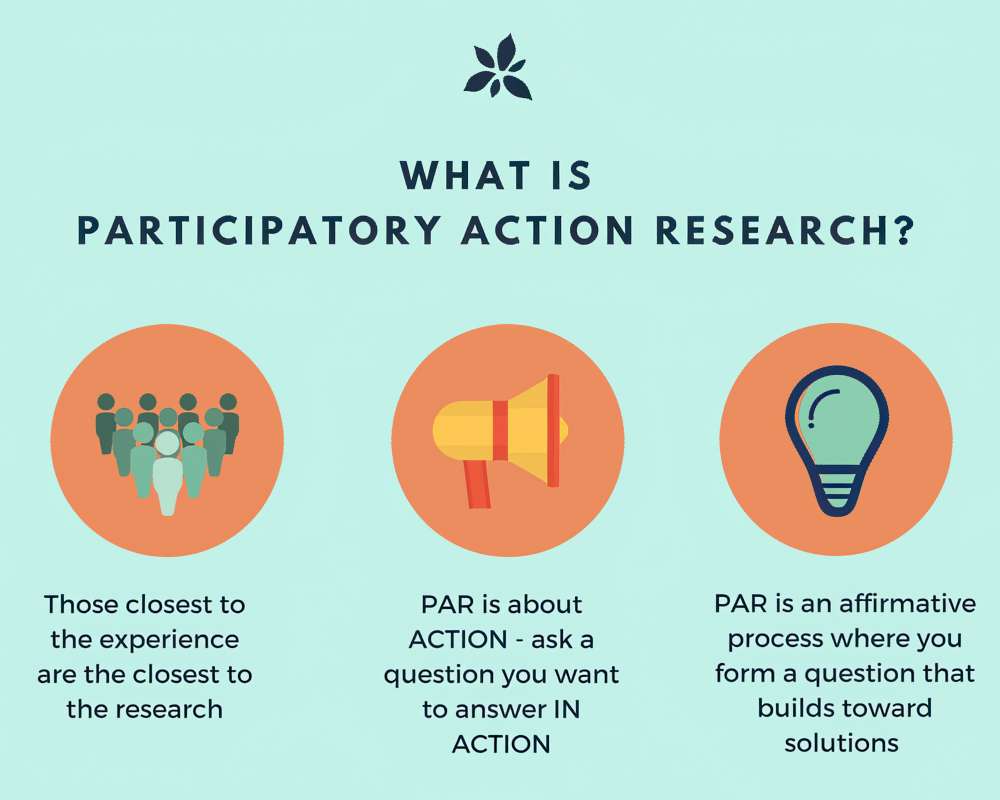
PAR, an acronym for “Participatory Action Research”, is a research methodology that prioritizes and legitimizes the expertise and perspectives that come from the lived experiences of people closest to the topic of inquiry—especially those that have been historically marginalized and traditionally excluded.
Credit: Designed by Freepik
In our projects, it centers the wisdom of Black teachers. These stakeholders are positioned as DESIGNERS of the research and EXPERTS on the topic rather than only objects of study.

The PAR process “Brings people together, through inquiry…. To make meaning of the condition under which we are living, WITH each other, for our collective liberation” (Galletta, 2019)

The Problem & Study Context
Extensive research has demonstrated that Black (and all) students have better outcomes when taught by Black teachers. Despite this, most schools nationally have more Black students than teachers. Moreover, Black teachers (and other teachers of color) have been leaving the classroom in greater numbers compared to their white counterparts.
Philadelphia and Detroit have not been spared from the broader trend of Black teacher turnover. A group of 10 Black teachers from Philadelphia and Detroit came together to make sense of the problem in their local context and consider solutions.
Study Design
With support from RFA’s research team, the group of Black teachers designed a PAR study. The goal of the study was to gain greater insight on what needs to change to support Black educators by lifting up, in their own words, both the contributions they make and the challenges they face.
Credit: https://ideascale.com/blog/what-is-research-design/
What made this study special?
1.
Teacher-researcher led → Black educators from Philadelphia and Detroit designed the study
2.
Interviews and focus groups with Black teachers
3.
Focus groups with Black students
Our Findings
1.
Key Finding #1: Black educators in Philly/Detroit make important contributions. They are invaluable, in part, because they…
Intentionally form special connections with students and one another:
Picture Credit: Freepik
Are necessary voices speaking truth in an anti-Black education system:
Picture Credit: The Atlantic
2.
Challenge #1: The trauma of white supremacy
Challenge #2: Lack of resources and supports
“I see a lot of that now. The kids are not bringing homework back or falling asleep in class because [of] what's going on at home. Some of them are transient, staying at someone's home….Their lives are disruptive at times beyond their control. Parents losing jobs. They're not able to come to school…We need more support at school as teachers. We need to keep attendance officers because it is hard for us as teachers to teach, to grade, discipline, do all of those things. We still need attendance officers to check on what's going on at home, why the kids aren't coming.”
Picture Credit: Teen Vogue
Challenge #3: Lack of curricular autonomy in current political climate
Despite these challenges, many Black teachers choose to stay in the classroom because they love their students.
Take Action
Credit: Designed by Freepik
Taking action based on the research findings is a critical part of the PAR process. Two evidence-based actions have emerged from our work:
Action #1: Black Educator Voices Microsite
This microsite serves as a digital archive of Black teachers’ voices and experiences. The cohort discussed a need to shift the public narrative about Black teachers and elevate their voices and perspectives. Specifically, we wanted to highlight the transformational role Black teachers play in Black students’ lives. We also wanted to raise awareness about the challenges Black teachers face in schools in order to support structural changes, and improvements within the profession for all teachers and Black teachers, in particular.
Action #2: Black Teacher Mentorship Program
Our data from the pilot cohort demonstrated that lack of support for new teachers can result in their attrition from the profession. Both newer and veteran teachers in Philadelphia and Detroit within our sample (those we interviewed) spoke of the lack of support they received and the need for additional and improved early teacher mentorship within schools. We applied our learnings, alongside our own lived experiences as teachers and envisioned the following teacher mentorship program:
Teacher Mentorship Pilot Vision
Sometimes actions and visioning takes time! The below teacher mentorship idea is a work in progress.
To support, sustain, and retain Black teachers, this idea for a pilot teacher mentorship program derives from our research with Black teachers in Philadelphia and Detroit, as well as our own first-hand experiences as Black teachers. We believe a new model is needed to better support new Black teachers as they enter the profession and navigate the challenges transitioning from study to practice as well as the additional and unique burdens Black teachers face. Drawing on and utilizing the wisdom and education capital of Black veteran teachers, this mentorship program is designed with, by, and for Black teachers:
A full-time position for Black veteran teachers to mentor a caseload of 8-10 Black teachers within their 1st & 2nd year of teaching.
Mentors spend ½ a day each week with each of their mentee teachers. Teachers receive in-depth, hands-on coaching and mentorship for two academic years and remain in the network beyond those two years. The mentorship includes support with:
- Lesson planning; Classroom management; IEPs and inclusion; Time management; Work-life balance; Teacher wellness; System Navigation and more
- Importantly, mentors and mentees should be matched according to same content or grade bands Ideally, there are at least 2-3 mentors/coaches in each city so that they are reaching and providing intense hands-on coaching to 40-60 new teachers each year.
The teacher mentor should graduate out of the position. It should only be a 3-5 year commitment for each teacher mentor. This will push the teacher mentors to utilize the program to its full potential so they can be training their replacements through the mentorship work.